
One of my students sleeps during a test
Reply

Mom: Mmmm this is really good soup — and I don’t even like soup.
Sina: Mom, you realize you make the best soup in the world — and you don’t like soup?
Mom: I guess so.
Sina: How is that possible?
Mom: I don’t know.
Not necessarily in sequential order.
– made cross-country skiing a winter hobby
– truly lost everything
– wrote an honest letter
– biked from Niagara Falls to my downtown Toronto apartment in one day
– played lots of ultimate frisbee
– became a weekday vegetarian
– which then evolved into being an almost-always vegetarian
– Fun Fact: “almost always” has mathematical meaning
– roamed the Cabot Trail
– saw first hand the power of the moon
– saw a fin whale up and close! oh man…
– made my first geocache
– went back to school
– finally learned Ito calculus
– got to teach again
– proved one of the most elegant/beautiful theorems in mathematics
– started learning how to read and write farsi (a work-in-progress)
The most elegant theorem I’ve ever proven.
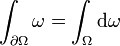
So much embedded information in such a simple expression. I wish I could tell you all about it.
One of my favourite inspirational photos, now in full colour. (Super cool.)
Dorothy Counts is taunted and harassed on registration day, the first time a black student attends an all-white school:

Look at that face.
[Coloured by: Sanna Dullaway]
“The exam will be open book.”
Not gonna spend my life being a colour.
She is Richard Feynman’s younger sister. She is also a scientist and because of her we know that auroras (northern lights) are caused by the interaction of solar winds and our atmosphere.
She tells us a wonderful story. Watch the whole thing.
Just plain wonderful.
Many many years ago as an undergraduate mathematician, I heard whispers of a strange kind of calculus called Ito calculus that deals with random variables (regular calculus can’t be applied to random variables because random variables aren’t smooth, and also they’re random). Calculus really is the study of smooth things, so I couldn’t possibly imagine how one could do calculus on random things.
I remember reading the Wikipedia page and that it was no help. Google was no help either. So I let it be.
Then when I was working for the Ontario Ministry of Tourism I attended an econometrics conference, and I remember asking some PhD’s about Ito calculus. They had no idea what I was talking about. I accepted that I would never know what Ito calculus was.
Flash forward to today. Or last week. I finally (finally!) know what it’s about, and can actually do it myself!
And it’s just gorgeous.
The best part: I finally get to learn mathematics directly developed by my main man Richard Feynman. And how cool is it that the mathematics invented to understand randomness in quantum physics is used to understand risk in financial markets?
[A: super cool]
Math is funny like that.
And its name is stochastic calculus.